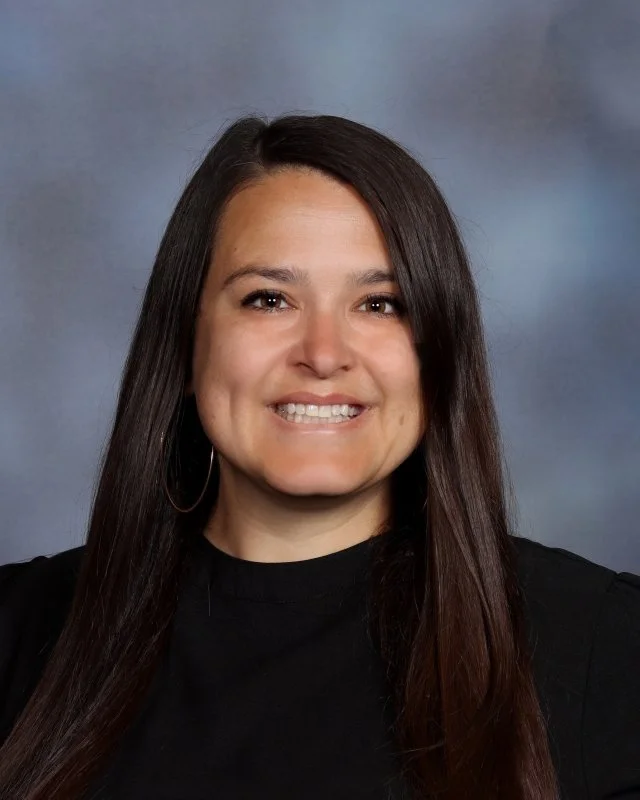

Quality Instructional Leadership for New Teachers with Weade' James
Policy researcher Weade' James shares research that she and her colleagues at the Center for American Progress conducted regarding new teacher induction programs. In this episode we discuss the findings of her research and what supports new and experienced teachers should receive from induction programs
Listen Now-direct link to episode
Links from episode
Weade’ James at the Center for American Progress
Transcript
Scott Lee: Greetings friends and colleagues, welcome to The Thoughtful Teacher Podcast, the professional educator’s thought partner-a service of Oncourse Education Solutions. I am Scott Lee. If you would like to learn more about how we partner with schools and education organizations please visit our website at www.oncoursesolutions.net and reach out.
In our conversation today I’m joined by Weade James. Weade is the senior director for K-12 Education Policy at the Center for American Progress where her research focuses on students with disabilities, low-income students and issues affecting students and educators of color. She has held past roles at the American Association of Colleges of Teacher Education and began her career as an educational advocate. Today we are discussing some of her recent work studying teacher induction programs-which as you might guess are often in need of greater support. But we will start out sharing how she became interested in education and education policy.
Welcome, Weade, to the Thoughtful Teacher podcast.
Weade James: Thank you for having me. So happy to be here.
Scott Lee: First off I always like to know how you got involved in education, because my understanding is you didn't start straight into the classroom. Am I correct?
Weade James: That is absolutely correct. So, I started, my undergraduate degree, program as a pre-pharmacy major, so I had no intentions of going into education. I was going to the medical field. And somewhere I think during my sophomore year, right after my sophomore year, I did an internship with a program called Breakthrough Collaborative which was known then as Summer Bridge many years ago that started in San Francisco. But Breakthrough Collaborative, I interned with that program in St. Paul, Minnesota, and basically, it's a program that pairs middle school students up with high school or college students who serve as teaching fellows to kind of support the academic gaps that these students, these middle school students are experiencing.
So, I interned with that program over the summer and got to engage in lesson planning and teach an English course and writing to middle school students, and just fell in love with education but I was more so interested in the intersections between, the cognitive and social-emotional development of children and how, the physical, social changes, environmental changes really impact learning.
So, I decided to switch my major to child psychology, thinking I was going to eventually be a child psychologist, a psychiatrist, and it just kept getting pulled back into education. Eventually after my undergraduate degree in child psychology, which I stuck with, I went back into the education field and, started working with Breakthrough Collaborative in DC to help expand the program in the DC area. So that's really how my journey began in education. I just couldn't get away from that work, and I'm just so glad that I chose this path.
Scott Lee: Wow. So how did you end up, becoming a researcher then?
Weade James: Yeah. And again, it's just one of those things where you, you try to plan and things just happen. So, while in DC I switched organizations I was working with, and started working with a center that was federally funded to support special needs children and families. During that time, I saw a great need for more research around evidence-based strategies to support students with disabilities, and really helping educators understand the sort of breadth of supports that are available out there.
And a lot of it was the lack of translation of research into policy and practice that I saw in that work. So, I would go to these IEP meetings, with teams and there were just lots of questions from teachers, from practitioners, right? And I would find myself often going back to the research when I would prepare for these IEP meetings about what are some of the latest studies saying about practices and strategies to support a student with this disability. And I really wanted to dig into that deeper. So, I decided then to pursue a doctorate program in education with an emphasis on special education policy. And that's really what led to, my, career path in the research field. And I've just learned a great deal and I think there's still much more we can do to help teachers translate research into policy and practice, and making sure that teachers have the most, recent knowledge of what is needed in the classroom.
Scott Lee: And that's so hard. I remember, I had taught for a while, become an administrator. The school I was at closed and I ended up different school district, different school from where I had been. And the difference in the IEPs from when I, where I had been before to my new school, because the emphasis was on, "Oh, it's got to be measurable."
And I'm like, “just because it's easy to measure doesn't necessarily make it a good IEP goal. This is about actually helping students access the curriculum and the instructional strategies to do that.” So, I know that continues to be a, a problem, that we have and of course, that's not really what we were planning on talking about today. The purpose today actually, is to talk about teacher retention and programming for new teachers.
So first off, before we talk about that specifically, I guess what's the status of the teacher shortage? We hear those words all the time, “teacher shortage.” And are enough new people coming into the profession, right now to fulfill our needs?
Weade James: Yeah. I, I'm glad you asked that question.
Prior to joining CAP, I, I was doing research and policy at the American Association of Colleges for Teacher Education, and one of our focus at AACTE then was supporting teacher preparation programs and recruiting and preparing, high-quality teachers for the workforce. So, I'm very well aware that the teacher shortage is still prevalent, across the country. And, we've seen this, become more dire, especially during the pandemic when a lot of veteran teachers left the profession. But the problem actually persisted before the pandemic. Fewer students, who are pursuing undergraduate degrees, college, programs are actually majoring in education.
So that's our first concern is that, a lot of young people are not seeing education or becoming a teacher as a viable path economically, for valid reasons, right? We know that there are challenges with the profession when we think about, teacher pay. In many states the starting salary of a teacher is just not, something that young people can live off of, when they're finishing the programs with loans and with debt because we don't have enough federal aid to support their career path.
And that's why we're seeing teacher residency programs or teacher apprenticeship programs be more attractive to, young people and also career switchers, right? (Scott Lee: Mm-hmm) Because these programs are accelerated and some of them are providing, really strong preparation.
But it's low cost, because as a teacher resident or apprenticeship you might be making an income while you're completing your preparation. So, there is definitely a concern around the teacher shortage, but I think what we haven't paid attention to much (Scott Lee: yes) veteran teachers are leaving the field.
Yes, fewer, young people are majoring in education. But what we also know is that a lot of novice teachers, those early career teachers within their first three years of teaching, are leaving the profession. And that's an issue that we also need to, pay very close attention to and watch because these folks are really the future of the teacher workforce, and if we're not able to keep them within their first three to five years, then we're really losing out on skilled veteran educators in the years to come.
So, there is research out there that tells us that nearly 44% of new teachers leave the profession within their first five years. This impacts the teacher pipeline, but it also impacts the quality of education that our kids receive if we c- constantly have this churn of teachers coming in and out of the field. We did a research study really probing into this, thinking about what is the role of new teacher induction given that only 31 states currently mandate that new teachers actually participate in any type of formal induction program. So yeah, that, that's really, the current state of affairs is in, in the teacher workforce. There's a lot more that we need to do, but we know that the shortage is still a problem.
Scott Lee: Mm-hmm. And, and that's been a problem even since, I was an early career teacher. It was still roughly the same number, about 50% were leaving, in first five years, when I started, teaching in the early '90s. And as someone who was in one of those very early residency programs. I'm not sure that I would've stayed in it, in education, had it not been for that type of program because I was just more prepared when, "Here's the keys to your classroom. Go, go do your thing." Which is essentially what happened, when I started teaching.
There was not induction or not much in the way of support beyond having a mentor. Which kind of brings me to the question is, in your study you mention, or you and your co-authors mention that, mentorship is the most common form of support for a new teacher induction program.
How effective is this? Because a lot of times that's all you have, and my own experience is that, it's probably not enough, for new teachers. So, what are your thoughts on that?
Weade James: Yeah, absolutely. I think, mentorship is, is critical, but, it really depends on, who the mentor is, and also how do we prepare new teachers to be mentored, right? (Scott Lee: Mm-hmm.) It should be a reciprocal approach where both individuals are prepared to understand the expectations of what mentorship should look like.
In our study, to your point about 80% of participants who mentioned that they had received some type of mentorship in their induction program. And close to 80% too stated that they had received professional development. But it could be a situation too where professional development is happening in isolation from the mentorship, right? (Scott Lee: Mm-hmm.) So, it's like, mentor teachers are not sitting in these PD workshops with their mentees and having opportunities to reflect after these workshops, and being able to talk about what are the practices they're now going to embed, and be able to have that proximity to provide more relevant coaching to their, their mentees.
So, I think we need to think about what does the structure of mentorship look like, not just a checkbox to say, “yes, this teacher has a mentor.” But how are mentors being trained to be effective and how are mentees being prepared? But what we found, again, our study it was a national survey across 38 states and DC, and we had a sample of about 308 teachers that completed this survey.
And one in three of the early career teachers actually stated that they have not participated in a formal induction program. So, I think this tells us that, yes some folks are participating in mentorship and teacher induction, receiving mentorship, but we also have some teachers who are not getting this at all, right?
So, we need to be very mindful of how we scale these programs. And I- one of the most startling things is that, 70% of the teachers that we did survey reported that they either have considered leaving the field or they have already left the classroom. So, if we don't, prioritize how we support new teachers, we're gonna see this percentage of teachers who are considering leaving the classroom or have left, continue to increase, and pretty soon we're not gonna have the workforce that we need to fully educate our kids.
Scott Lee: Yeah. And I also, when I think about, besides the fact that I just ... It's hard to imagine that there's no type of induction program for one in three teachers. That's, that's pretty scary in and of itself. And then, varying levels of effectiveness for that other, two-thirds. I think about, and going back to the situation when I was in my 30s and had been an experienced teacher and been an administrator, and then go back into a classroom in a different district, I was part of the new teacher induction program, and all it was, you were assigned a mentor.
Which worked for me just fine because at that point, I was 10, 12 years in education at that point. But there were a couple of other career changers who were my age or a little bit older, and it was not adequate for them. Is there a problem with sort of this, one size fits all compared to older career changers versus people who are younger and coming right out of college? Do they need different types of induction programs? Is there a problem with the one size fits all approach, for programs? And, what are the suggestions you might have on that?
Weade James: Yeah, that's, that's a great question. I, I do think having a one-size-fits-all approach to new teacher induction is ineffective, because we do have, teachers who have varying level of professional experiences, right?
(Scott Lee: Mm-hmm.) We have some novice teachers who are fresh out of college. This might be their very first job. And we have some novice teachers who are career switchers who've had a professional background before. Maybe they've been managers, right? (Scott Lee: Mm-hmm.) So, they have, that sort of, management, qualities in them that they could actually serve as, support to other novice teachers.
So, I do think we need to be intentional about, identifying what are the skill sets that new teachers are coming into our schools and districts with, and what are the needs and the gaps that we need to fill and address, and align them and pair them up with mentors who have the ability to support those needs that they do have because the early career teachers that reported that they have considered or already have left the classroom are expressing these for various reasons. So, the top three reasons that they've said is they're leaving because of working conditions, they're leaving because of lack of support, and they're leaving because of level of pay, right?
So, for some teachers perhaps being in a one classroom, one teacher situation is what's burning them out, right? (Scott Lee: Mm-hmm.) So perhaps you might want to think about a structure where that novice teacher has a co-teacher and a mentor to be able to support them in the co-teaching model.
So that may look different than a teacher who is doing well and, and performing well in, like, that one teacher, one classroom model, but they may need a little bit of extra support in terms of, like, using data to inform and drive instruction. And then you have some teachers who need more help with classroom management.
Maybe that's what's burning them out and causing them to leave the field. And this is why it's important to have strong school leadership. We need to make sure that our principals and assistant principals and school leaders are doing frequent observations of teachers, right? Most teachers are observed often twice a year, right? So, we need to make sure those informal observations are happening frequently, that we're using that data to really target the type of mentorship and the type of supports that we're providing to teachers.
Scott Lee: And in your study, and in your conclusions, you mention the state of Delaware and their approach to new teacher induction. What are they doing that is working, and why did you mention that program or collection of programs in particular?
Weade James: Yeah, so I think Delaware is definitely one of the, the model states that have done some great work in, in teacher induction. Louisiana, I believe California had some work that they did, New Jersey. So we have some bright spots of places that are, some proof of concepts, right? We just need to think about how do we scale them. So, in Delaware the district, has a four-year induction program for new teachers. And this was something that started in 1994, so it's been around for a while as like a pilot program to provide mentorship and they've since scaled it, right? So, teachers receive mentorship and professional development that's focused on not just, how are you doing as a teacher, but also the instructional mentorship. To think about how do, especially those that are just finishing the teacher prep program and are, need more help sort of taking that theory and research that they've learned and really translating it into the classroom in the day-to-day practices.
These teachers are getting that type of instructional mentorship during their first two years. And then additional professional learning, during their last two years. So, it's a four-year program and this is important because most teacher induction programs are one year or two years, but Delaware has a four-year program, which I think is really a good model, right? Because what we saw in the research is that the 44% of teachers that are leaving the profession are leaving within the first three years. So, I think this four-year really provides a good runway to make sure that teachers are really settled into the role.
And then I think what's also helpful here is that the teachers are paired with their induction coaches, and they are also evaluated. The coaches are evaluated, and they go through training, to become coaches, right? So, it's not just cherry-picking someone who you think has been, they've been a teacher for maybe 25 years, so they must be a good mentor, and pairing them up with the new teachers. That doesn't work, right? So, you could have been in the classroom for 25 years, but maybe you weren't that effective for 25 years, or maybe, you don't have the qualities to mentor. And that's important, too, right? I think there's some teachers who might be great in the classroom, but may not be ready or open or excited about mentoring. So, I think having an evaluation process where coaches are evaluated and trained on how to mentor, is very important
Scott Lee: Yeah, and, are there other things that some of these states are doing, besides mentoring? I guess, what other supports should be provided?
Weade James: Yeah. I think, Louisiana, model to the teacher induction program, part of it includes, affinity groups, and there's some states who have done this too for, for teachers. So, it's basically, a professional learning community, but not just focusing on the core functions of the job but, the whole needs of a new teacher, right? Whether it's social-emotional needs, mental health needs, and so forth. So, having affinity groups for new teachers I think is important, particularly when you think about maybe there's a, a new teacher who completed their teacher prep in a more urban environment, but now they're working in a rural community, right? So, thinking about how do you support that teacher, or vice versa.
And thinking about how do we also, pair teachers up based on, sort of interest. Maybe there's a teacher who's interested in, a career pathway that they're, they become a master teacher or go into administration. Thinking about affinity groups that really support that interest of them, right? So maybe there's a new teacher affinity group of those who desire to eventually grow into more leadership or more of a mentor of other teachers. So, I think that's a good model, that works well as well.
Scott Lee: So, some teachers, probably at least a third, are in places that are lacking induction programs at all. And then there's a lot more that have an induction program, but it's not really a quality induction program. I w- want to talk about two different groups of teachers. First off, what advice would you offer, to those newer or novice teachers in one of those places, one of those school, states or school districts where the, induction program is either nonexistent or just lacks quality? What are some things that, that they should, should do or ask for and, what advice would you offer them?
Weade James: Yeah, I think first, I, I will go back to my last comment is start an affinity group as a new teacher and where you bring together other new teachers in your local community or in your district, right? Where you guys can share resources and be support to each other. I think that's something that can be done. We have all of the tools at our fingertips, whether it's you can have virtual affinity groups where you're inviting other teachers to come together monthly or whatever the case may be.
I think another sort of strategy is lean into the teacher prep programs that are in your community. Look into the local colleges and universities and reach out to them, right? Perhaps there are, faculty who are interested in being a mentor to novice teachers in the field. I think that's an area where, school districts can do a better job of really engaging with teacher prep programs at universities so that faculty and staff at those universities can support the mentorship process or establishing a mentorship structure, if a school district does not have the resources to do that.
So those are two things that I would say teachers can do is lean into the local universities and faculty and those who are preparing future teachers, and then also start an affinity group within your local community.
Scott Lee: What about experienced teachers? What, could or should they, be doing or asking for?
Weade James: I think they should be asking for time within the day to mentor younger teachers. I think that is one of, the barriers and challenges to the mentorship model. Veteran teachers are being asked to, be master teachers, to mentor new teachers. They're being tasked with all of these things, but there isn't, they aren't given the time to really do those things.
So, I think working with your school administration to think about what does, a scheduling look like to allow you the opportunity to meet with a new teacher for maybe 20 minutes, a week to provide coaching or maybe twice a week to provide the type of support that they need I think is critical.
We also need to think about, the other factors of what we're asking teachers to do. We're asking veteran teachers to, to mentor, like I said, to be master teachers a- and p- put, have all of these different hats, but are we compensating them for that time? Is there an additional stipend that's given to veteran teachers, if they serve as a mentor? Typically, if they're a master teacher, there are incentives and things like that. But we really need to make sure that mentorship is respected, and that teachers are compensated for that time.
Scott Lee: Okay. Where can folks, find out more? What are some resources that you would suggest?
Weade James: Yeah. I would say definitely taking a look at our report that we published on how to increase the retention of early career teachers. That can be found on the Center for American Progress website. That's americanprogress.org. I would also encourage, folks to also lean into the local educator unions and also the national teacher unions.
The National Education Association, NEA, has a great tool around issues that intersect with new teacher induction. They have a, a teacher pay map that you can see things like what the sal- the starting salary of new teacher is, or average salary of teachers are. I mention that because teacher pay was in the top three factors of why new teachers are leaving, especially at a time where only 13 states and DC offer sa- a starting salary of at least $50,000 for educators.
We cannot neglect the fact that there are other issues here that are driving teachers to leave the profession, and one of them certainly includes teacher pay. So that's an issue that, I would encourage folks to, to look into. And then, I think also looking into what's happening in your state to see if there have been any conversations around, starting an induction program if your state doesn't currently have one.
Are there any task forces, that are focused on teacher retention that you can raise this issue with about how to improve your existing induction program? I think generally a lot of state leaders want to support the teacher workforce. They want to retain high-quality teachers. I think the stakes are very high right now to boost student achievement, and a lot of that comes down to the quality of educators and retaining the educators we do have.
So, this is a ripe opportunity for teachers and advocates to be bringing this up to leaders and supporting them in the quest to do so.
Scott Lee: And we'll be sure and link to some of those as well on our website for folks to see also. So, thank you so much for joining us today, Weade.
Weade James: Thank you so much for having me.
Scott Lee: The Thoughtful Teacher Podcast is brought to you as a service of Oncourse Education Solutions. If you would like to learn more about how we partner with schools and youth organizations strengthening learning cultures and developing more resilient youth, please visit our website at w w w dot oncoursesolutions dot net. Also, please follow me on social media, my handle on Instagram and Bluesky is @drrscottlee and on Mastodon @drrscottlee@universedon.com
This has been episode 8 of the 2026 season. If you enjoy this podcast, please tell your friends and colleagues about us, in person and on social media. Also, five-star reviews on your podcast app helps others find us. The Thoughtful Teacher Podcast is a production of Oncourse Education Solutions LLC, Scott Lee producer. Guest was not compensated for appearance, nor did guest pay to appear. Episode notes, links and transcripts are available at our website w w w dot thoughtfulteacherpodcast dot com. Theme music is composed and performed by Audio Coffee.