How Students (and Adults) can Communicate Using Dignity with Karren Minagla
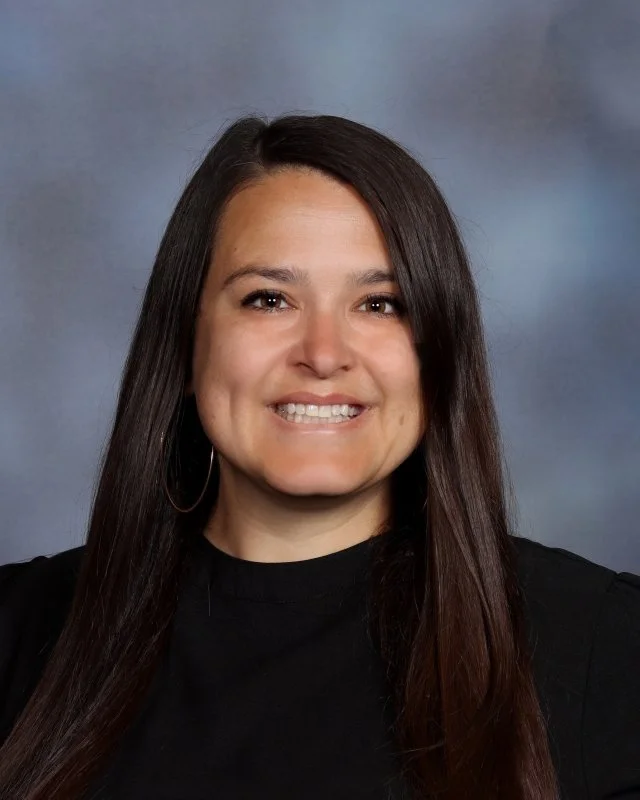
Does the communication in your classroom or school promote dignity? This is a problem that that the organization UNITE is working to solve. In this episode Karren Minalga discusses the Dignity Index and shares how educators can create a classroom climate that promotes dignity and helps build a classroom culture that promotes belonging, connection, and achievement.
Listen Now (direct link to listen in browser)
Links from Episode
Dignity Index website
Dr. Donna Hicks website mentioned in episode
Transcript
Scott Lee: Greetings friends and colleagues, welcome to The Thoughtful Teacher Podcast, the professional educator’s thought partner-a service of Oncourse Education Solutions. I am Scott Lee. If you would like to learn more about how we partner with schools and education organizations please visit our website at www.oncoursesolutions.net and reach out.
For our conversation today I’m joined by Karren Minalga of UNITE. UNITE is a nonprofit organization dedicated to helping people treat each other with respect and is the developer of the Dignity Index-we’ll discuss more about these in our conversation. Karren is a senior program associate for K-12 Education at UNITE where she brings the Dignity Index to schools and community groups across the US. Before coming to UNITE Karren was a teacher and administrator with expertise in exceptional education, instructional coaching, and positive behavior support systems. She will share about her work using the Dignity Index with schools, but first we discuss how as she tells us education became her “jam”.
Welcome Karren to the Thoughtful Teacher podcast.
Karren Minalga: Good morning.
Scott Lee: So, first off, can you tell us your story about how you became an educator?
Karren Minalga: Yeah. So, if you count the preschool that I ran when I was eight years old- ... I've been, I've been teaching for most of my life. I started formally in education after high school.
I was a paraprofessional - in a special ed preschool in Logan, Utah, and I was then a behavior specialist for some schools and districts. I was a classroom teacher, special education, and I ended my career as a school administrator. Again, special education, instructional coaching. I've done everything in between, from paraprofessional to administrator, preschool to post high.
Education's just, it's my jam. It's been my life calling.
Scott Lee: So, before we discuss the Dignity Index, can you tell us kind of the backstory of Project Unite?
Karren Minalga: Yeah. Yeah, so about seven or eight years ago, one of our co-founders, Tim Shriver, he was grappling with this problem of the toxic polarization in the country.
He had seen that our political rhetoric had gotten so just heavy and gnarly and divisive. And so, he and some friends were doing some research. They were having conversations about what was leading up to and contributing to this polarization in our country. And they kind of stumbled upon an answer, which is contempt.
And so, then the question became like, “how do we heal this?” So, in about... Let's see. It was 2021, Tim Shriver and his colleagues, Tammy Pyfer and Tom Rosshirt, they landed on this idea of using dignity. If contempt causes divisions, then the theory or the idea is that dignity could heal divisions.
And this is based on, the work of Dr. Donna Hicks. She's done decades worth of work and research in international conflict and, and solving those problems. And, so Tim, Tom, and Tammy landed on this idea of using dignity to solve the problem, of contempt in our country.
Scott Lee: And we should, mention, - because a lot of, listeners may have heard of Tim Shriver. He was also the- (Karren Minalga Mm-hmm.) ... co-founder of CASEL, the Collaborative for Academic and Social Emotional Learning, which, uh- Yeah ... a lot of teachers will be familiar with the CASEL model.
Karren Minalga: Yes. And he also is the chair of Special Olympics. (Scott Lee: Mm-hmm.) So, this is kind of his life. He gets to see what dignity looks like for every individual, and he's also been able to see just the incredible displays of dignity and expressions of dignity with his athletes in the Special Olympics. He's always got really very cool, profound, touching stories to tell.
Scott Lee: Mm-hmm. So, the focus originally was mainly on political speech. Is that- Yeah ... uh, that correct?
Karren Minalga: Yeah. Yeah. So, the, the idea was these toxic divisions are starting at the top and, and trickling down into the rest of our society. So, with the index, the thought was, “let's figure out how we can heal our political divisions, and that might help us solve some of our personal divisions and some of these personal relationship fractures that are happening.”
And what we quickly found is that the applications for our personal divisions were way more powerful than, the political. The political are still important, and we're still addressing that, but, but when we look at ourselves, we call it the mirror effect, when we turn this back on ourselves and look at our own language and look at how we're treating others, that's where we can make a difference. That's where we can start to really make some lasting change.
Scott Lee: Mm-hmm. Yeah, because, one thing I think that's important for everybody to understand, this is not just something that would be for social studies teachers, - (Karren Minalga: Yes, absolutely) since it's not just about political speech.
Karren Minalga: Yeah. When we rolled this out in 2023, one of the first groups that showed a lot of interest were educators. We heard from teachers, parents, grandparents saying like, "We need this in our schools. We need this in our classrooms." And not just to teach in social studies, not just to talk about in history, but for teachers talking to teachers, students talking to students, students talking to teachers, teachers talking to students.
How do we build these relationships so that our future generation sees that there's a better way? That maybe this is all they've known in their lifetime, this, this toxic rhetoric, but there's a better way, and if we can equip these students and these future leaders with tools to do better, they will. I, I get to work with students often, when we go and talk about the Dignity Index, and it gives me so much hope for the future, because these kiddos get it.
They are equipped with the language to talk about feelings and emotions and acceptance and belonging. And if we can just give them the tools and put them on the right path, they're gonna do amazing things.
Scott Lee: So, what does the dignity index in general look like, (Karren Minalga: Yeah) for somebody, who may not have heard of it at all, that sort of thing?
Karren Minalga: Yeah, so the index is an eight-point scale, and we use it to measure contempt and dignity in your speech in times of conflict or disagreement. So, one is extreme contempt, eight is extreme dignity. And we start at a four and work our way down with contempt. So, a four is basically, "I'm better than you. You don't belong."
We're not calling names yet, we're not making fun, but we're just starting to separate ourselves. At a three, at a two, we're starting to attack people's character. It's us versus them. A two is us or them. We're using dehumanizing language. And we end at a one, which is a call for violence. And then on the happy side of the scale, five through eight, we have five, which is your, your first expression of dignity; you have a right to be here. You have a right to be heard. I'll hear you out, you hear me out, but we're not necessarily engaging yet. At a six, we're looking for common ground. We're trying to find ideas that we share, values that we share, and we use that to solve a problem. At a seven, we're looking for things that we don't agree on. We are open to hearing somebody out. Maybe we'll change our mind. A seven is curious and humble, willing to admit mistakes. And then at, at an eight, everyone has inherent value. We treat everyone with dignity no matter what. It's very aspirational.
Scott Lee: Mm-hmm.
Karren Minalga: But at a seven, what I think of is a perfect classroom culture. We have teachers and students who are humble and curious and wanna learn and will change their mind and can make mistakes and learn from them. So, to me that seven is such a perfect classroom application. If we had classrooms that were at a seven, the learning that takes place would be incredible.
Scott Lee: Mm-hmm. Yeah, and it's interesting that it goes beyond finding common ground. So many times, especially in various ways to communicate that, people that I've talked to in different situations, In academics, the goal is to get to positive ground, and nobody ever goes beyond that sometimes.
Karren Minalga: Mm-hmm. Yeah. We see at a six you're finding common ground. At a seven, you're finding higher ground.
Scott Lee: Mm-hmm. So yeah, I think that's important and a real advantage to this compared to possibly some other tools out there. Because so many things stop at what on the dignity scale would be a six.
Karren Minalga: Mm-hmm. Yeah, and a six isn't bad. Sometimes a six is the best that you can do, and that's okay. But the real learning and the real growth and the real healing of these divisions and the problem-solving comes at a seven. And again, not every situation will call for a seven, but when it does, it's magical.
Scott Lee: Yeah. So right now, how is the dignity index being used in schools and in, in kind of the K-12 context?
Karren Minalga: So right now, we are really focusing on the adult culture.
Scott Lee: Mm-hmm.
Karren Minalga: These kids are the ones who are going to lead us one day. They're going to be our doctors, our lawyers, our teachers, and, a- and they're gonna do amazing things. But first, as adults, we've got to model what we're looking for. So right now, we are working with, school boards. We train school boards on how to talk to each other, how to talk to constituents. We train district and school administrators on how to talk to teachers, how to look at their policies and their procedures, their hiring practices, their discipline practices through the lens of dignity.
Is what you're doing honoring dignity or promoting contempt? We work with teachers on, again, how to engage with each other, but then how to engage with students in a way that honors their dignity and creates cultures where dignity is prized and valued, and that students feel like they belong in schools.
Moving forward, what we are moving to is teaching students how to do this themselves. The idea is that we have a, a well-trained staff and teachers who can bring this to the students. So not only are they modeling it in front of their students, but then they're able to teach the language of dignity, the language of contempt. Because at the end of the day, the important thing isn't the scoring.
It's not that a student can look at a clip and say like, "Oh, that's a four. That's a two. That's a seven." Yes, that's important, but the tool itself we want it to sensitize people to the language that they're using, and we want them to see like Separating yourself, mm, we're better than them, it might not seem like a big deal, but that's contempt.
Scott Lee: Mm-hmm.
Karren Minalga: And on the flip side, saying, "I want to hear what you have to say. We might not necessarily agree, we might necessarily engage further, but I'm gonna hear you out." That's, that's dignity. So, we want students, we want teachers, we want families and communities to start to recognize the language that they're using, and know that there's a better way.
Scott Lee: Mm-hmm.
Karren Minalga: Well, know that there's a better way if they'd like to solve problems.
Scott Lee: Well, and, oftentimes, I hear it in schools all the time, the, teachers are concerned or even, saying negative things about kids not understanding, respect or not being able to speak and, and interact with respect, whether that's focused on the adults or whether it's focused on the other kids. And, and oftentimes we don't do a good job of actually teaching that in schools.
Karren Minalga: And I would, I would go so far as say we don't do a good job of modeling that. I was a teacher. I was an educator for 23 years. I remember those, uh, staff room conversations. We all have those, the sandpaper kids, the ones that definitely got our hackles up, and I remember saying very unkind things, and things that not to the students, but to my colleagues and, and talking about them in ways that were definitely a four and below on the Dignity Index, and yet we expect our students to do better than we do? We, we expect them to demonstrate a behavior that we haven't modeled. And the other thing that I like to point out, too, is that dignity and respect are different things.
Dignity is this inherent worth that we all have from birth. We're born with it. You can't take it away. You can't give it to someone. You can honor their dignity, but you can't take it away. Respect is earned. Respect is something that can be given, can be taken away, and when we ask kids to respect us for what? What have we done to earn respect?
Scott Lee: Mm-hmm.
Karren Minalga: I think that if we want that respect from our students, we give it to them, and we honor their dignity.
Scott Lee: Yeah, so, are there any other long-term plans for the Dignity Index in schools?
Karren Minalga: In my perfect world, every student would enter school where they feel like they belong. Short-term, we are in our second year of Students for Dignity clubs. Those are student-led clubs where basically students work to raise awareness and honor the dignity of others in their schools, and again, create these places where students feel like they belong. They do club activities. They do school-facing activities where it involves the, student body. They do community-facing activities where they involve others in their community with this dignity focus. One of our schools last year even made the news for talking about dignity, bringing the index to their school, and just focusing on ways that they could make sure that everyone in their class is seen and heard and valued.
Scott Lee: So, what advice would you offer to teachers in how to think about and practice communication skills?
Karren Minalga: So, the, the first thing that we talk about is that mirror effect. So, before you start applying it to others, before you start rating everybody else's speech, look at your own. We talk about the language of dignity.
I, I think about it as if you're learning a second language. After college, I taught on the border of Arizona and Mexico, and when we would cross the border to go bowling or something, I knew enough Spanish to get by. I could get us to point A or point B, but if there was an emergency, if there was a crisis, I automatically went back to my native language- (Scott Lee: Mm-hmm) which is English.
Scott Lee: Mm-hmm.
Karren Minalga: I think about contempt and dignity the same way. If contempt is my primary language, I can use dignity when the stakes are low, but when the stakes are high, I switch right back to contempt. So, learn dignity as if you were learning a second language. Practice it. Practice it with your friends. Practice it with your family, with your dogs that scratch at the door at 2:00 in the morning. Use, use dignity as often as you can so that when you are in those high-stakes situations, that's what you fall back to instead of contempt.
Scott Lee: Mm-hmm.
Karren Minalga: If you go to the website, and I will send you details
Scott Lee: for that- Yeah, yeah on the website. We'll have a, we'll have a link on the Thoughtful Teacher Podcast website.
Karren Minalga: Okay, perfect. There's a scoring guide that kind of goes into detail about the different levels of the index, and it gives language for each of those levels. I use that almost as my language study guide.
I look for examples of a six and a seven and an eight in media, in my social media. When you surround yourself with contempt, it's what you'll practice as well. So, I've been working really hard to surround myself with dignity. I follow the social media accounts that, that promote dignity and that promote belonging and understanding and just honoring the dignity of others.
So yeah, just immerse yourself in that language. Practice,
Scott Lee: Do you have any stories about a group of teachers or students that you'd like to share?
Karren Minalga: Yeah. We've, we've had some really fun, examples from across the spectrum. We had... I heard a story about a school board that I did a training with at the beginning of the year. There was a controversial is- issue coming up and things started to get heated, and one of the board members stopped and said, "Hold on. I can tell that I'm getting mad. I'm gonna choose to be curious and not furious. Just a second. Now tell me more about your position." And it changed the tone of the whole meeting, which was amazing.
We've had a teacher in Utah who uses this with his social studies classes, and he, he starts outward facing. Let's score politicians. Let's see what a debate looks like. And his students very quickly use that mirror effect and turn it inward. He said that he overheard them in the cafeteria, right after he introduced this lesson saying, "Oh, that was a three language, wasn't it? Yeah. I think I just scored a three on the dignity index."
I even had my own stepson likes to call me out on it. I was stuck in traffic. He was in the back of the van. I, I'd forgotten that he was there. I had the radio up and someone cut me off and I just, I let them have it verbally, and from the backseat my seven-year-old, "Um, sis, I'm pretty sure that was a two on the dignity index. That was some dehumanizing language."
So, so these [kids] they get it. The kids get it, and I'm so excited to be able to work with this generation. Like I said, they get it. They've got the vocabulary for this. And I love being called out, even if it's just in traffic with my stepson. But yeah, it's been really fun to see this being internalized and being used.
Scott Lee: Mm-hmm. So where can people find out more information?
Karren Minalga: So, if you go to our website, it's, dignity.us; there are tons of resources if you... There's a, a tab for resources. Something exciting that we have is the Dignity Daily. It's kind of like a Wordle for dignity. You go online, you get a passage, you guess what you think it would be scored, and it will tell you if you were right or wrong and why it was scored the way it was scored.
You can find copies of the index, you can find copies of the scoring guide that I mentioned, some conversation guides. There's a lot of really great things on the website. You can also sign up for our weekly newsletter. It's, it's just like your weekly dose of dignity inspiration.
It also has a feature where we talk about, where w- we are in the world, where we're talking about dignity, if it's in a community near you. Just a way for you to keep in touch with, with the movement. We'd love for people to join this movement. We want this to sweep the country. Like I said, I want this in every school. I want every student in every school to feel like they belong.
Scott Lee: And how would an administrator, say a district level administrator or even a school level administrator, go about, getting more in-depth professional development? Is that available as well?
Karren Minalga: Absolutely. We love to work with anybody. If you go to our website, scroll down to the bottom, there's a button for contact us, and that, it's a general form, but we read all of those emails, and we can send them to the right person.
Scott Lee: Well, great. Thank you so much, for joining us today, Karren.
Karren Minalga: Yeah. Absolutely. Thank you for having me. I hope you can tell I love talking about this. This is my, my favorite thing. I've loved working with it, and I appreciate the chance to, to spread the word.
Scott Lee: Great. Thank you.
The Thoughtful Teacher Podcast is brought to you as a service of Oncourse Education Solutions. If you would like to learn more about how we partner with schools and youth organizations strengthening learning cultures and developing more resilient youth, please visit our website at w w w dot oncoursesolutions dot net. Also, please follow me on social media, my handle on Instagram and Bluesky is @drrscottlee and on Mastodon @drrscottlee@universedon.com
This has been episode 9 of the 2026 season. If you enjoy this podcast, please tell your friends and colleagues about us, in person and on social media. Also, five-star reviews on your podcast app helps others find us. The Thoughtful Teacher Podcast is a production of Oncourse Education Solutions LLC, Scott Lee producer. Guest was not compensated for appearance, nor did guest pay to appear. Episode notes, links and transcripts are available at our website w w w dot thoughtfulteacherpodcast dot com. Theme music is composed and performed by Audio Coffee.