Be a Behavior Detective with Cheryl Randle
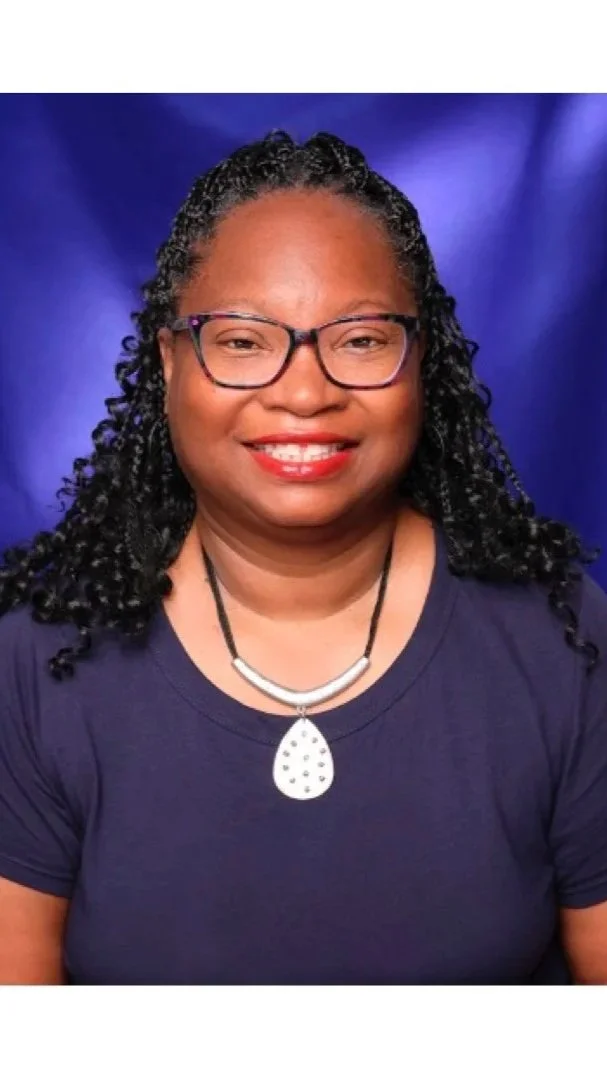
Figuring out how to motivate a disconnected student takes diligent observation and understanding. Cheryl Randle is an instructional specialist helping teachers and administrators support students. In this conversation she shares how she approaches finding the clues to help teachers motivate students.
Listen Now-direct link to episode
Links
Mona Delahooke’s website-mentioned in episode
Breathe for Change website-mentioned in episode
Transcript
Scott Lee: Greetings friends and colleagues, welcome to The Thoughtful Teacher Podcast, the professional educator’s thought partner-a service of Oncourse Education Solutions. I am Scott Lee. If you would like to learn more about how we partner with schools and education organizations please visit our website at www.oncoursesolutions.net and reach out.
For our conversation today I’m joined by Cheryl Randle. Cheryl is currently a district special education instructional specialist for a school system in Texas where she coaches educators and administrators to support students. She has also been a behavior interventionist, exceptional education teacher and regular education teacher. She is also the founder of CRANDLE SEL, a caregiver-centered ecosystem supporting individuals who care for students with special needs and those who serve them professionally using an integrated model of special education coaching, restorative yoga, and parenting education. We start our conversation with her unusual route to becoming an educator.
Welcome to the Thoughtful Teacher podcast, Cheryl.
Cheryl Randle: Thank you for having me.
Scott Lee: So first off, before we talk about, what you're doing now in your current role, what got you interested in going into education in the first place?
Cheryl Randle: I wish I could tell that beautiful story, that it was a clear path. But it's kind of like through a host of experiences. And the one experience that really led me to thinking about public school education was I used to work for a nonprofit where I was a credit and homeownership counselor. And so, I got to go out in the community as the community educator and just had...work with like veterans, work with domestic violence victims, different people from w- all walks of life, and I had a chance to, hear their stories. And so, their stories were very interesting, but always had like a common theme, “that I wish I had listened in school more- ... and had a different school experience.”
So, I was like, "Hmm. I'm always this lifelong learner.” It's so interesting that I had a 26-year career in insurance, property and casualty, and then that led to a lot of mergers and layoffs, led me to having a chance to work in nonprofit. And so, hearing these stories and having my own set of experience, I was like, "What if I can shape like a younger mind?"
And so, it led me to research public school education, how I could use my, degrees to go into, public school education, and so it led me to that field. Now, I thought I was going to do English and reading- ... because I have a love for books and writing. And someone said, "Before you jump into it, be a sub."
And so, I subbed for like seven months and somehow, I got to junior high, and I said, "Mm, no. This is not it." High school, “this is not it.” Let me take my name off the list. And someone said, "Well, you need to try special education. You have this spirit, this energy."
And I was like, "I don't know. I done seen some- ... some stuff that I don't know." But so, one day I did put my name, and I ended up in a specialized program. And I remember I was like, "I don't know what I'm doing." Like, I... Nobody trained me for this. I know that I took my educational course, but nobody trained me, so I just went off instinct. And I was sitting on the floor and playing with one of the students, and I was just, like, biting a play apple. Well, that student lit up and was so interactive that they ended up biting me on my shoulder. They didn't break the skin.
They didn't break the skin, but I guess they said, "Well, you, you're imitating biting-and so I want to imitate what you're doing." But I, I don't know, when I went home that day after helping that whole day, it was like I was tired, but it was rewarding, because I was like, "Oh my God." They were saying that student had not laughed and lit up like that, and I was the one who had a chance to do that. And so it was like that just hooked me. It hooked me to that is what I want to do. I want to explore this. And so that's how I ended up in special education.
Scott Lee: Well, something similar happened to me. That was not the plan and- ... one thing led to another, and I'm teaching in a residential school. And then once I started doing that, I'm like, “what I was doing was boring, and this is not boring.”
Cheryl Randle: Oh, it’s definitely not boring. Definitely not boring.
Scott Lee: So, tell us about, your current role is and a little bit of, background about the schools that you work with or the classrooms that you work with.
Cheryl Randle: Currently I am, working district-wide. And so, I work with Title I schools. Right now, my current role, which I have been in, I can celebrate a year now. So, I am currently a special education instructional specialist, so that role is, going around to, a group of schools, and I coach in special education.
So, I coach the teachers, the paraprofessionals, the principals. And I get to sit with them and learn everything connected to the special education programs, whether it be a specialized program on their campus. I get to, collaborate on the individualized education plan, which is called an IEP for the student.
Scott Lee: Mm-hmm.
Cheryl Randle: And so just making sure that the campus is aware of the procedures, aware of what SDI is, specialty design interventions, specialty design education for the student. That's what my role is. The past two years before coming to this role I was a behavior interventionist. And I worked just with special education students. So, I still was in a coaching role, but it was all related to behavior.
Scott Lee: We talked before we started recording about applied behavioral analysis, and you have a background, as a BCBA if, I heard you correctly.
Cheryl Randle: I took courses that they take- Okay ... but I'm not, I did not sit for an exam.
Scott Lee: Okay.
Cheryl Randle: Just took all the related courses that they take.
Scott Lee: So, what have you found are some of the advantages and limitations of applied behavior analysis?
Cheryl Randle: Like I said, I've been trained to do it through just, professional development, different-courses. And what I found is for the limitations for me, what shifted, because AB- ABA, applied behavior analysis of course, is evidence-based. Right. And so, we want to use evidence-based strategies for our students who are receiving special education services. So, it is good in that respect. I have not, worked in a clinic, but I have worked with students who have received ABA services through a clinic, and so I've been able to, like, see some of the differences whenever the student is trying to integrate back into school after having a clinical experience.
I've seen successes of that. I've seen limitations of that. What shifted for me was when I read a book called Beyond Behaviors by Mona Delahooke, I believe. Yes. Mm-hmm. And so, when I read that book, it's like a light bulb came on for me, and I started to just have a shift. And there's something else that we can do, that, that yes, there are parts that, great parts that work with, ABA, and then there are parts where it, we have to go beyond.
Scott Lee: Mm-hmm.
Cheryl Randle: And so, she gave me that perspective, and also going through a year-long SEL and yoga program with Breathe For Change, that shifted my thinking on trauma-informed practices. So having both those perspectives just shifted me into knowing that there are certain limitations when it comes to certain behaviors that we got to go beyond. We gotta do a- we gotta do some more work. We gotta dig a little deeper whenever some of these strategies we find not working for our students.
Scott Lee: So, is there some different kinds of data that you suggest teachers collect? Or what kinds of data do you because applied behavior analysis is hugely important in relying on the data that-you collect.
Cheryle Randle: Yes.
Scott Lee: What kind of data do you suggest that teachers collect and use in their classrooms, particularly about behavior? Because teachers, teachers get plenty of academic data.
Cheryl Randle: Yes, they get plenty of academic data, and we can definitely dig into the academic data, excuse me, to find out, uh, a lot. But then when it comes to behavior, I think sometimes we look at it as, how do I do that? How do I take that data? ... How can I get there? And so basically, I start just from the standard, the ABC. So that's the antecedent, the behavior, the consequence. So, I start there and teach them what does that mean.
How can we collect that? Then we go to the setting in which the behavior occurs, the frequency, the intensity. I really sit down with the teacher to design something that's gonna be easy for them to, to collect, because let's face it, they got a lot on their plate. Mm-hmm. And so, then we come in and you want me to do one more thing?
Like, “I'm already got all this, this, this behavior, then you want me to do what? Take some more data?”
But it's, “I have to see that how do you like to take data? Do you like to take it on paper? Do you like to take it electronically? Let's design something that we can get the data that we need, 'cause we gotta have some data to look at the function of the behavior.”
And how we gonna do that is to look at patterns. And so, the data's gonna tell the patterns, but then I guess I always say, "Put on your detective hat." It's just not about, the numbers. It's about, as you have built a relationship with that student, what have you noticed about their interests? What have you noticed have they mentioned about home?
What have you noticed about how they co-regulate, how they connect emotionally with you, with your energy? What are their trauma triggers? So ... behavior is communication, but behavior, is detective work for me. And so I always just encourage the teacher, we gonna be a behavior detective. I'm a have you-put your behavior hat on. Get your behavior badge out.
And once I get them to understand, like, I am here to support you- I'm here to not, add one more thing, just integrate. How can we integrate it to what you already know about the student?
Scott Lee: And we're also talking about, prevention as well. Why do you think having a preventative a- approach is important, and-what are some examples of that?
Cheryl Randle: Yes. Oh, mm, I'm all about the prevention. From the moment the student gets off the bus, you should be having on that detective hat, because whether they get off the bus, when they get, uh, if they a car rider, like, “how are they getting out? Like, what is their mood?”
Begin to understand. I'm always the person, too, that looks into the student's eyes, 'cause I can tell a lot about if they had a lot of sleep-
Scott Lee: Mm-hmm ...
Cheryl Randle: or not. And sometimes too by their hair. So, if they got their hair disheveled, like, I'll be like, "Oh, get ready. It might be a day." Yep. So, it's those things for me, being very aware of the student that's entering into your class, and being very aware of that.
But prevention for me is about building a supportive environment. So, I'm all about that when I come in, I also coach on the, the classroom setup, the environment. Is it a supportive environment? Does it provide a safety for the student? What can we do? Now, I'm a lot about clutter, that's all. There's some good posters that can be on the wall.
There's some not so good posters. And we think that we decorate our classroom because we decorate it for the student, but sometime we decorate it for ourselves. And that's okay, but we have to have balance. Right. And when we do that, and knowing that sometimes our students with the attention- Mm-hmm and they're, they're overloaded, they're overstimulated. And so, we got a lot of things in the environment that overstimulates them.
Scott Lee: Well, and it- That could...
Cheryl Randle: Yeah.
Scott Lee: Yeah. And I, yeah, just want to interject. It's interesting that you mention that, because about a year ago, last season, had an architect on as a guest, and that's one of the things that their research has showed as well-when designing schools, is that one of the things they suggested for teachers, if you can't build a new school, is, a lot of times what they see is there's too much stuff on the wall.
Cheryl Randle: Yes.
Scott Lee: So anyway- don't want to cut you off, but, it's so interesting , how that also connects about-
Cheryl Randle: Yeah
Scott Lee: classroom culture.
Cheryl Randle: We have, yeah, we think about how we connect with our environment and how envi- and even as adults, how our environment makes us feel. Like some people, like they have a desk full of papers where they can find it, and if you come in and clean it up, of course that's gonna mess with their rhythm.
But then there's other ones like the person like me, I have to have a spot for everything on my desk. Because if it's cluttered, then my, I find that my mind is cluttered, and so it connects for me. And it also connects for a student, that if they don't have a safe space in the, classroom, maybe they can go out to the side and have a moment, or if it's just too much for them or they don't connect and feel at home in their classroom, those things are also- communicating to them.
It can communicate distress and send them into dysregulated modes. So, it's important to be proactive as we are setting up our classroom. And I find myself, when I had my classroom, my, my paraprofessionals, they would know, "Oh, Miss Randle, she got, got an idea." And I was like, "I got an idea."
Especially when you get a new student in, and they're trying to get acclimated, and then you'll see some things, oh, that, that is a trigger for that student. And so maybe we have to stop and we got to modify the environment temporarily to help. Now, I didn't change my room every other week, but I would say at least twice during that year, I, I would have to have a change.
Scott Lee: And, that also, can help with a more trauma-informed approach. What- Yes, it
Cheryl Randle: sure can.
Scott Lee: Yeah. Why is it important for teachers to understand about trauma-informed approaches and what are some things or some tips along the trauma-informed line that you think are important to know or that you'd like to share?
Cheryl Randle: Well, for me, just coming from a background of being raised by a single mom and being the only girl, having brothers, and experiencing things even in my childhood growing up, when I go into the classroom. I understand that students do not come in with a clean slate. So, they come in with their experiences. And so, when we recognize that they come in with their experiences, then we begin to understand some of those experiences have trauma experiences in them. And so, when we come with that informed approach to know that everyone has not had a wonderful childhood experience, they haven't had a two-parent home or, that, we just haven't had that.
And so, we have to have that approach to understand that they come with their experiences. And what do we do with that? So, the more that we are trauma-informed educators, the more we are aware of that, I think it just, it makes you knowledgeable. It is more in your toolbox. - It builds you up when you trying to be a behavior detective, trying to understand that you might have tried a token boy, you might have tried a visual, and that's not reaching them right now.
What is it that we can, reach them with? So, I always tell them, "What is their interest? How can we integrate that into the academics right now and meet that student where they're at? How can we use the multi-sens- sensory approach to integrate their experiences in the classroom?" And they can be successful right where they at right now until we can get them academically where they at.
So, what I hear a lot of times, “they just low. They won't do.” But I'm like, “they are capable. Every child is capable of learning. Are they... Do they learn the same way? Absolutely not.”
Do they have different experience and come from different experiences? And we have to tap into that, and we have to say, “what can we do now to give them just a little bit of success until we can get them where they need to be?”
Scott Lee: And y- you mentioned a multi-sensory approach. Can you give us an example of what you mean by being multi-sensory?
Cheryl Randle: So just tapping into our senses of seeing, smelling, touching, feeling. How can we do that? So you might be trying to teach me the alphabets just verbally and the sound, and it's like I'm not getting it. So, how can you put together a activity where I can use sand to draw the alphabets in the sand, use the Play-Doh to manipulate, use Legos? How can you tap into that for me to help me learn- the sounds without just, sitting me at the table and making a sound for me and expecting me to repeat it back? That's not the only way I can learn.
Scott Lee: it. So, you're talking more about, about the way that you approach your relationship with the child.
Cheryl Randle: Yes. Yes.
Scott Lee: Mm-hmm.
Cheryl Randle: And that is, that's good. And, see, when you are at that, that, what they call that kidney table That you see when you go in the classroom.
Scott Lee: Oh, yeah.
Cheryle Randle: So as that student is there, and you got these different multi-sensory, activities going on for them, then I'm talking about, “so, what's your favorite character?” Now, I've been known to make a token board with your favorite character and have the tokens made out of your favorite character.
So, I remember having a student that, just loved sharks. Everything was sharks, all kinds of sharks. And every time we went to the library, anything, or he had a conversation with me, it was all about sharks. And so I was like, "Hmm." Super smart, but then just fixated on that. But I was like, "So I'm gonna tap into that."
The different reading assignments, I bought different, like, shark m- manipulatives, different things. And so, that student, guess what? They lit up. They were excited. No longer, dreading coming to the table to, to learn, but they were excited when they saw that I had all different types of shark stuff.
Scott Lee: Mm-hmm.
Cheryl Randle: Yeah so, I was become the cool teacher Who provided the shark stuff.
Scott Lee: There you go. Uh, so do you have any other stories you'd like to share about a student or a group of students?
Cheryl Randle: Well, I was always known, 'cause I taught for three years in an autism classroom, self-contained classroom, and so one way that, my students learned was we took, the first two weeks of school we would always take a field trip around the school.
So, I would get these looks like, "What is she doing?" Like, "She got these students walking around the school and stuff, and then she's, being animated and acting out different things." But guess what? It was engaging for my students because a lot of people wouldn't expect my students, because they have communication and behavior [perceived deficits].
So, they didn't expect that they could go to the lunch room and key their own lunch room number in to get their lunch, or even sit in the cafeteria to have lunch, or even, eventually a lot of my students were able to navigate the school, on their own. Because guess what? I, I use repetition, and so I call 'em, "Let's go on a field trip. We're going here today. We're going to explore the cafeteria. This is how you come into the cafeteria. This is how you pick up your tray. And then you get to the end and you put your number in. Now, did I have to practice with some of my students more?”
A lot of times.... we use a little calculator, we use the cash register, we use whatever to teach them how to remember their student ID. And then I, we just celebrated. Whenever the para would come back and tell me that so-and-so entered that lunch number independently-... that was, like, the highlight of our day.
But guess what? People would see my students and they would be like, "Oh my God, Ms. Randle, night and day from when they started.” And then-... this be, having them being able to integrate into their gen ed classes, that was the success for me. And for them to be able to do that, whereas people would say they had such communication and behavior that they did not see that for them. But I saw it for them, and so that was my mission, to take them on those field trips, to make them a part of their school environment so they could be successful.
Scott Lee: And, we don't think about it very much, but a lot of the activities we expect kids to know how to do in school, going to a lunchroom is new. –
Cheryl Randle: Yes ...
Scott Lee: I mean, even if you go to a restaurant cafeteria style restaurants are not common anymore, and so it's a different environment. Yeah.
Cheryl Randle: It's definitely different. And then when any way you can, take an interdisciplinary approach, and you can use life experiences, and we don't just have to do that in specialized classrooms. That need to be in all classrooms.
We need to be able to teach and model for our students what that looks like when they do go to a restaurant. Uh, what they- Mm-hmm ... what does that look like when I want to make friends? We can't just rely on social media, 'cause there's a plethora of it to show them what it looks like. So, for me, that's the fun that I would bring into the classroom, like the cash registers with the Chick-fil-A menu and/or making place mats where we can pretend that we're at Chick-fil-A, or we at s- a restaurant, pretending to do that, and modeling for them what that looks like. And so that's just having fun with what you do, 'cause it's already laborious. Mm-hmm. It's a lot.
Scott Lee: Yeah.
Cheryl Randle: So, just finding the joy, being able to find the joy in your day, to be able to teach them through the practical experiences.
Scott Lee: Mm-hmm So, do you have any other resources that you'd like to share?
Cheryl Randle: Well, I do have a Teacher Pay Teachers store- it's called C. Randall SEL. And so- most of, the res- resources are, like, K through fifth, those age groups. But you can go there and it- and then, uh, the number one social story, believe it or not, is stay safe at school.
Mm-hmm. That one has been, or mimicking others. So, there's some social stories. There's some activities, that you can take a multisensory approach with. So, you can go there and check it out. And a- and again, that's C. Rhondle SEL. And I also have, two, children's books that I wrote that- that could be helpful as well, and that's just based on when I got my little puppy. Even my little puppy, he had to have a routine. And so, I share the two children's books.
Scott Lee: Okay. And yeah, and we'll be sure and have links to those on our website as well. Okay. Well, thank you so much, Cheryl. I appreciate you joining us today.
Cheryl Randle: And thank you for having me. I enjoyed the conversation.
Scott Lee: The Thoughtful Teacher Podcast is brought to you as a service of Oncourse Education Solutions. If you would like to learn more about how we partner with schools and youth organizations strengthening learning cultures and developing more resilient youth, please visit our website at w w w dot oncoursesolutions dot net. Also, please follow me on social media, my handle on Instagram and Bluesky is @drrscottlee and on Mastodon @drrscottlee@universedon.com
This has been episode 7 of the 2026 season. If you enjoy this podcast, please tell your friends and colleagues about us, in person and on social media. Also, five-star reviews on your podcast app helps others find us. The Thoughtful Teacher Podcast is a production of Oncourse Education Solutions LLC, Scott Lee producer. Guest was not compensated for appearance, nor did guest pay to appear. Episode notes, links and transcripts are available at our website w w w dot thoughtfulteacherpodcast dot com. Theme music is composed and performed by Audio Coffee.