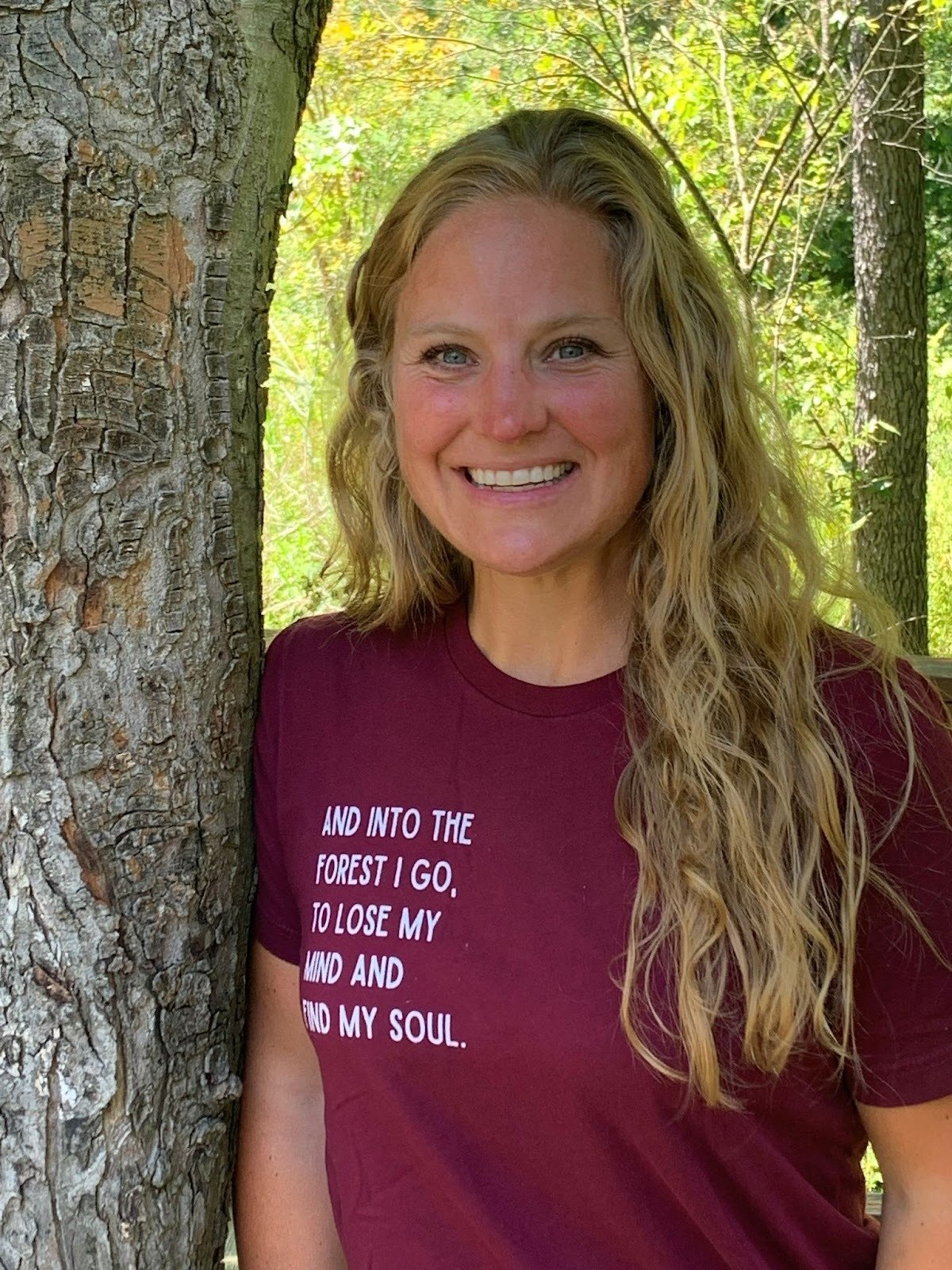

Yes! Grammar Can Be Fun to Teach with Patty McGee
It's happened to all of us we have to teach grammar and our teeth clench because we hate it. Almost all teachers have some writing instruction, but the grammar lessons remind us of all the red ink on our own papers when we were in school-so we find work arounds and avoid. In this episode Patty McGee, co-author of the new book Not Your Granny's Grammar, shares that it doesn't have to be like that.
Listen Now (direct link to episode)
Links
Not Your Granny’s Grammar book from Corwin Press
Transcript
Scott Lee: Greetings friends and colleagues, welcome to The Thoughtful Teacher Podcast, the professional educator’s thought partner-a service of Oncourse Education Solutions. I am Scott Lee. If you would like to learn more about how we partner with schools and education organizations please visit our website at www.oncoursesolutions.net and reach out.
As we start the 2026 season of The Thoughtful Teacher Podcast-our seventh, I would like to thank all our listeners around the world for you continued support and since our students need great educators now more than ever-let’s keep learning and growing!
Today I am sharing a conversation with Patty McGee. Patty is a former teacher and media specialist who now is an author and education consultant working with teachers in classrooms helping improve writing and grammar instruction. She has authored and coauthored four books including Writer’s Workshop Made Simple: 7 Essentials for Every Classroom and Every Writer and most recently with Tim Donohue Not Your Granny’s Grammar. We’ll discuss how all teachers can improve grammar instruction in a few moments, but we start by learning how Patty came to be a teacher.
Welcome Patty to the Thoughtful Teacher Podcast.
Patty McGee: I'm really happy to be here.
Scott Lee: Well, great. So, start off just telling us a little bit about why you decided to become a teacher in the first place.
Patty McGee: Oh, there were so many, many, many reasons. First, I just looked up to my teachers so much because they seemed like magical to me the things that they could do and teach us and things that they knew.
And then as I got older, I realized that really education is a change maker for so many people and their success in the world. And. That really was what drew me to the profession, and it really, it really is a, just a special, almost sacred profession that I'm so proud to be a part of.
Scott Lee: So, what subjects did you teach?
Patty McGee: So, when I taught fourth grade, I taught them all.
Scott Lee: Oh yeah.
Patty McGee: And, the one that I just wasn't. Feeling really good about was the entire literacy block. Mm-hmm. It was something where I was, you know, when you're really good at something, you don't know always how to teach it to others because you don't. You're not entirely aware of your own processes. So, I needed to really dig into learning more about reading, writing, and all the things in between.
Scott Lee: So, when did you realize that there was a problem with the way we taught grammar? I guess that was part of what happened, right?
Patty McGee: Yes. So, like it's about 30 years ago now, where I really started to refine, as I was saying, my literacy block. And during that time, everything seemed to be growing and becoming more engaging, and I was seeing learning happening. And then we'd get to grammar and I didn't know anything different than worksheets, correction, identification, and then immediate expectation of usage.
That was, that was all I knew. Mm-hmm. And I just thought to myself back then, “there's gotta be a better way.” I still taught it using those older methods, but I still didn't see the impact I was hoping to see. And so, it was just a curiosity of mine. For the past 30 years.
Scott Lee: So, it was kind of a, a slow moving, “I know this isn't right, but I don't know what works or what I should be doing” sort of thing.
Patty McGee: Yes, yes, totally. And so, I just started finding little things that were like, okay, this is a little different. Let's try this. And I would see at least, some level of engagement. That was increased a bit, but it was about 10 years ago when I met my co-author Tim Donahue, who is the person who knows more about grammar than anybody else I know. And I was writing curriculum for the district that he was the supervisor of humanities and we were writing the grammar part of the curriculum and he got up and explained grammar in a way that all of a sudden, the whole room was like, “oh, that's how you think about it.”
And so, his side was kind of teaching us grammar so we could understand it. And then the other side of it was my part where I was designing instructional opportunities to be able to teach grammar in a way that wasn't the traditional approach. So, at that point, we've like really teamed up doing like local workshops and just constantly like joking, “let's write a book one day.” And I, I called him for the longest time Grammar Yoda, but I realized Yoda does not speak grammatically correctly. So, we, he's just the grammar hotline. So anytime I need an answer to a grammar question, which even after writing a grammar book and doing all the studying of grammar for all these decades it's something that everybody still needs to look at no matter how, how long we've been doing it, no matter how old we are. I think, the only person I know that doesn't need to still learn grammar is Tim himself. So, I just always have questions.
Scott Lee: Yeah. One of the things that you've talked a lot about how the way we teach grammar creates a sense of shame among students. And as I was preparing for our conversation, I was just thinking about having been a history teacher, myself and I'd have students do a lot of writing and because I hated the way grammar was taught to me. It was really rare that I would ever mark a student off or, or point out a problem with grammar unless it was more like, “Hey, could you write this sentence so it makes a little bit more sense?” Mm-hmm. Part of it was, I hated that part. Part of it was, the things like the Harbrace Handbook, I had just hated so much. I'm like, “I don't want my students to, to see any of that. Was I crazy, or was this more normal or kind of a common occurrence, I guess?
Patty McGee: I think it is more common than. Anything like, I just, and the reason I'm saying that is not just because I've worked with students and have seen how when we shift our grammar practices, kids learn. But it's also, I've done a lot of just informal research, asking a lot of my educator friends just what it is that, is so hard about teaching grammar and one, if not, the top thing that was identified was not knowing grammar themselves. And because we're teachers, we're supposed to know it. And so, there's this like really uncomfortable part of it all because only a small portion of people learned grammar from the traditional methods and they're grammarians.
Which is great 'cause I, we need grammarians. They, they remember the things, right? But at the same time, not all of us can learn in that fashion. And so not only did I see it in students, I saw it in teachers and the amount of embarrassment in both students and teachers. When you think about it, like there's all these words that we use, uh, “grammar police”- I'm silently correcting your grammar. Like it's all very intimidating. And, and creating this, like, if you don't know it you just aren't as smart as you think you are. Something like that. It's just not a- it's not a tone that promotes learning.
Scott Lee: Hmm. So, what should a young history teacher like the young me do differently? I mean, because I avoided even trying to make it look like I was correcting grammar, as, as long as it made sense, that's all that matters, “The overall argument of your paper is, is what I'm really looking at.” And I probably didn't do a good enough job on the grammar side with students. What, what should a teacher like me have done differently?
Patty McGee: Well, one, I think cut yourself a break. Like it really is like another whole layer. So, it-it, think about this, that there's a very, very, very good chance that the teachers, the literacy teachers, we're using the same methods that were used when we were kids and not out of anything but the best of intentions because this is all, this is what we knew.
And so, kids are coming to you then without having a full grammar experience to then be able to use it in other content areas. So, one that, that really is an important way to approach a content area is, “Let's have you write and let's hear what you have to say and explain to me what you know or prove an argument.”
One little thing that teachers can do in content areas is just say, “this is the one grammatical thing I'm looking for.” So I am looking for, and this goes all the way into college because college professors also see this, “I am looking for capital letters at the beginning of sentences and punctuation at the end of sentences, and that is the only grammatical thing I'm looking for, or I'm looking to make sure your sentences make sense.” So like those could be just like picking one thing that is on say, a rubric or a set of expectations when you're in the content area. I also just personally have created a couple of cool things, that actually use grammar to teach content. There's a lot of different possibilities on how we can use different grammar manipulatives that are specifically content related but also kind of weirdly teach grammar as a byproduct, which is pretty fun.
Scott Lee: So, one other thing that you've suggested, and this would be more for teachers who spend more time working specifically with writing is the grammar study process. And I'm a big fan of lesson study, so you talk about the grammar study process. What does that look like in a classroom?
Patty McGee: Hmm. Yeah, it's a, it's definitely different than lesson study. Let me give you a little bit of my process of how I came up with this.
Scott Lee: Sure
Patty McGee: So over the years when I have noticed something that's ineffective but used anyway in my instruction, I look outside of school to find inspiration basically. So, I thought to myself, “if we're going to study grammar and grammatical concepts, what do I do when I study something when I'm not in school?”
Most of the time school is memorization, and that is one part of-of learning, right? Of studying something we memorize. But there were so many other things. So, for example, I love to refinish furniture using this special type of paint that's very pliable and artistic and there's just so many things you can do with it. So, I started to study that and there were so many things that I did aside from memorized. I hypothesized like, “what might this look like?” I sought out experts, sought out feedback. I reflected on what I was doing and what I knew about that and what I still would like to do. I was experimenting and playing with the paints before I was actually putting them on the furniture.
And so many other things that just naturally come to us when we're trying to learn something, and that when we're studying something truly. And so, I thought, “Those are just the majority of things that are missing from grammar instruction right now.” And, and what can we do to provide opportunity for that for students and, and that's basically what grammar study is, is a variety of entry points to learning grammar that include all of those things that I just mentioned.
Scott Lee: So how would data collection be different compared to what a lot of teachers would be doing now in the way that they teach grammar?
Patty McGee: Yes. Well, data collection would happen informatively. On the daily. So, first of all, in grammar study, I recommend spending 10 minutes, three to five times a week studying grammar with those different entry points and thinking of a grammar study as like almost like a snowball effect. Where we're starting off. Where we're starting off. But every time we learn something or engage with grammar in a different way, we are accumulating more grammar knowhow that's uncomfortable for many teachers. We were taught in teacher school that here's the objective at the beginning of the lesson, mastery by the end of the lesson.
Grammar study is not that. Grammar study is learning across time. I often say that grammar is to writing as a paintbrush is to a painter that a painter really never stops learning how to refine their art. And it's the same thing with grammar. Grammar is how we create meaning on the page and we do so artfully.
And so that's why grammar study is just like completely ongoing and with that, the assessment would happen. On the daily. In that way, we see what kids are able to do, almost do and not yet do, and I just like to keep a little clipboard with a grid of student names and then just jot down the things that I'm seeing they're learning.
I also recommend grammar notebooks, and that's where kids have the chance to record their learning, practice and play, write down any types of reflections, but it also gives me a glimpse into what are they starting to wrap their heads around? What do they seem to have knowledge about at this point?
And that's another way of, of really looking at how kids are growing. I have to say my favorite is to have a pre and post assessment. So, for example, if we study sentences, which is my recommendation for the first study that we do, I give a little pre-assessment. It's very short. I have said three different types of sentences on there, and I ask kids to write down what they notice grammatically or otherwise about the sentences. And I often get the question from teachers like, “it, it's clear they don't know much like about the grammar here. Why are we doing this?”
Well, my favorite thing to do then is give it back to students at the end of a study and either in a different color or in a sticky note write down what they know now and when kids see the difference. And we see the difference there is just that sense of satisfaction and “Wow, yeah, I can see where I was and I can see where I am now.” So, those are just a few ways of assessment, or assessing grammar knowledge within a study.
Scott Lee: Mm-hmm. So how do you see classroom cultures shifting if you change the way that you teach grammar?
Patty McGee: So, I'm going to just start by quoting a seventh-grade boy that I was in a district and working with a group of teachers on grammar, and I demoed what would be a series of say, five days of lessons. And I explained to the class when I got in there, “I'm going to be teaching you grammar in a different way than what you've experienced before.” And when I was leaving a student shouted out, “that's so much better than the old way!” The way that we teach grammar can actually shift the entire tone of our classroom.
The curiosity that starts to blossom right away with students is really quite wonderful. For example, I got the question when I was teaching in a classroom and I was teaching simple and compound sentences, and I was saying we've got two simple sentences also called independent clauses. Here's how you make compound sentences and inevitably as low as second grade, meaning grade, grade wise, kids will ask, “well, can you put three simple sentences together?”
That's a seventh-grade standard. So just the curiosity alone that blossoms and the conversations that happen and the engagement, it's, it's just really amazing to watch. And honestly, it's harder for teachers to. use this grammar study process because it's unfamiliar to us, but kids are very familiar with being curious and engaged and playful.
And so, when we see that, those ingredients don't need, and of course there-there is explicit teaching, that's where we really step in. But on the other days, we're more of a facilitator. We're more of a coach, or say a challenge creator like, “that's almost a compound sentence. You're just missing one thing, see what you can find.” And it's usually in partnerships, so kids are co-building grammar knowledge out loud, which is really important because standard grammar is not the grammar we hear, and it's not the grammar we read. It's the standards that we're supposed to be or we're charged with teaching, that are in the standards.
And I'd like to meet a couple of the people that came up with them, right? Because there's some that I'm like, “what?” But basically, the whole experience, the whole tone of grammar instruction completely changes for the better. There's delight. And when we see delight, you know, there's something good going on there.
Scott Lee: Mm-hmm. Yeah. And you mentioned standards and one of the things that, that I often disagree with on standard, well there's quite a few things -depending on the state is that sometimes, particularly in writing our standards are almost too small. You mentioned the situation where kids in second grade are accidentally coming up with an issue that's a seventh-grade standard. I'm just curious, do you ever run into situations where the standards interfere with teaching grammar?
Patty McGee: Yeah, I, I think the ones that are kind of arbitrary or the grammar standards that don't necessarily show up as often from state to state, for example, indenting a paragraph.
Scott Lee: Mm-hmm.
Patty McGee: That is not a consistent thing that happens any longer.
Scott Lee: Right.
Patty McGee: Indenting paragraphs is one way of marking a paragraph, having no indentation and a-a line space, and then the next paragraph is an acceptable way. And so, to like drive home the indentation when it's not really something consistent when that's a standard that feels arbitrary to me.
Scott Lee: Mm-hmm.
Patty McGee: It mattered I guess when, when we were using typewriters more than computers, that we were able to put a dash between the syllable of a word that was continuing on the next line. And now that we're using computers, we really don't need to know that, but that's in the standards some places and in fact, writing for a publisher, not for this particular book, but writing for another publisher, having to have that in there, the publisher didn't even have the correct software to be able to have hyphenated word on two lines. So, things like that do get in the way.
Scott Lee: Yeah, it is interesting how now and having, having written in various situations that are different. Yeah. The, editorial style manual of an organization oftentimes is different. Mm-hmm. And kids are, and you know, students are gonna run into that. I had a situation where I'm in an argument with somebody over a style issue, and they're saying, “you ended a sentence with a preposition.”
And I'm like, “yes.” And they're like, “you can never do that.” And I'm like, “yes, you can.”
That, that's one of the things I think is, I think might be helpful too, just for students to understand now is that sometimes there are different style guides depending on the type of writing that you're doing. And you're gonna run into that as an adult.
Patty McGee: And not only that, but those style guides update every few years. Yes.
Scott Lee: Mm-hmm.
Patty McGee: So, grammar isn't static. Grammar is ever evolving.
Scott Lee: Yeah.
Patty McGee: Yes, and that could be frustrating for the grammarians. We're like, no, we must do it this way. We must not end a sentence with a preposition and that has evolved.
Scott Lee: Yeah. And I mean, and, and just for you English teachers out there, I still get it, that you should, if, if a sentence ends in a preposition, I do go back and look and make sure there's not a better way to write it, but occasionally to make sense, it has to end in a preposition, even though we still want to avoid that.
So just, just want to, just want to throw that out there for everybody. You've mentioned some feedback from students. What kind of feedback have you received from teachers that you've worked with?
Patty McGee: Oh, goodness. It's been really interesting. I was just recently at NCTE and National Council of Teachers of English Convention and we presented on grammar study, you know, Not Your Granny's Grammar is what we call it. And it was a room to our shock, a room that was completely packed and we were very happy about it. The reaction of the realization of this new way of teaching grammar was just mind blowing for so many teachers in the best of ways. Like there was a point where I handed out a couple of manipulatives to play with after Tim had taught a couple of grammatical concepts and when I pulled the group back together, number one, it was really hard to pull the group back together because they did not want to stop using them, but two. I asked them, I'm like, “when have you ever laughed out loud during learning something grammatical?”
I mean, the place was in stitches at each different table with the things that they were creating. And so, the reaction has been really positive, really affirming in so many ways. There was somebody who was also in that session who is in charge of the learning of English in China And she is like, “this is what the people who are teaching English in China needs. We need to get you guys to China.”
Like it's just a very interesting like, reaction or somebody else that I, I greatly admire and have seen as, as an inspiration and now a mentor in this work was also at this session and said he learned a lot. So, the reaction has been so positive from teachers. And it's because also yes, what they're experiencing, but when I'm demoing in a classroom, what they're witnessing and how kids engage.
Scott Lee: So, tell us where people can find out more and remind us the name of the book again.
Patty McGee: Yes. The book is Not Your Granny's Grammar, an Innovative Approach to Meaningful and Engaging Grammar Instruction and you can find it on the Corwin website. Corwin is our publisher and if you'd like to purchase it from there just put in the code, “save 20” and you'll get free shipping and 20% off. It's on Amazon. I'm pretty sure it's on Barnes and Noble website. So it's pretty easy to find.
Scott Lee: Okay. And do you have a website also?
Patty McGee: Oh yes. Yeah. Patty mcgee.org and Patty is with a y and McGee is M-C-G-E-E. And I have lots more goodies on there. So, I have what I was referring to before about grammar in the content area. I have a couple tools that I created for that, that are free you to download and definitely lots more of grammar, but also things that I've done with writing instruction.
Scott Lee: Well great. And we'll be sure and link to those as well. Thank you so much for joining us today, Patty.
Patty McGee: Thank you so much for having me. I so appreciate it.
Scott Lee: The Thoughtful Teacher Podcast is brought to you as a service of Oncourse Education Solutions. If you would like to learn more about how we partner with schools and youth organizations strengthening learning cultures and developing more resilient youth, please visit our website at w w w dot oncoursesolutions dot net. Also, please follow me on social media, my handle on Instagram and Bluesky is @drrscottlee and on Mastodon @drrscottlee@universedon.com
This has been episode 1 of the 2026 season. If you enjoy this podcast, please tell your friends and colleagues about us, in person and on social media. Also, five-star reviews on your podcast app helps others find us. The Thoughtful Teacher Podcast is a production of Oncourse Education Solutions LLC, Scott Lee producer. Guest was not compensated for appearance, nor did guest pay to appear. Episode notes, links and transcripts are available at our website w w w dot thoughtfulteacherpodcast dot com. Theme music is composed and performed by Audio Coffee.